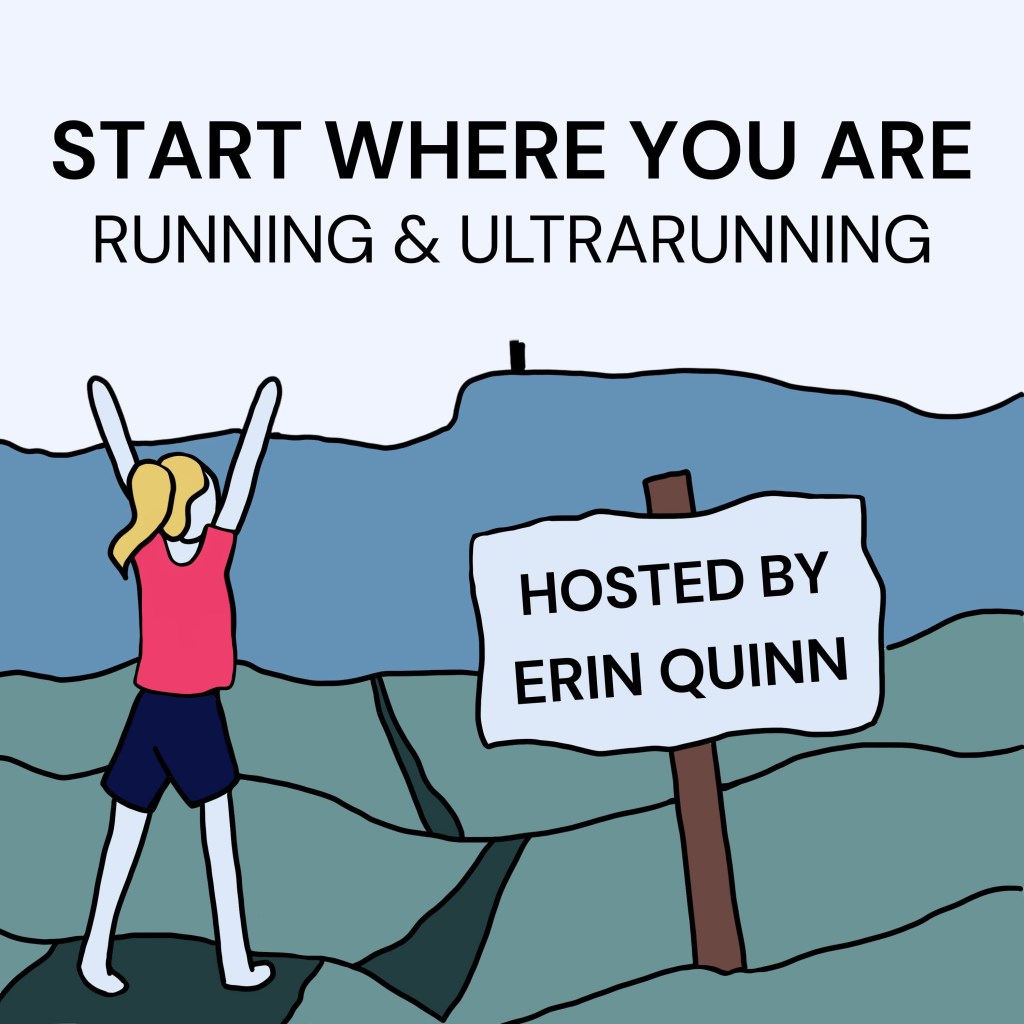
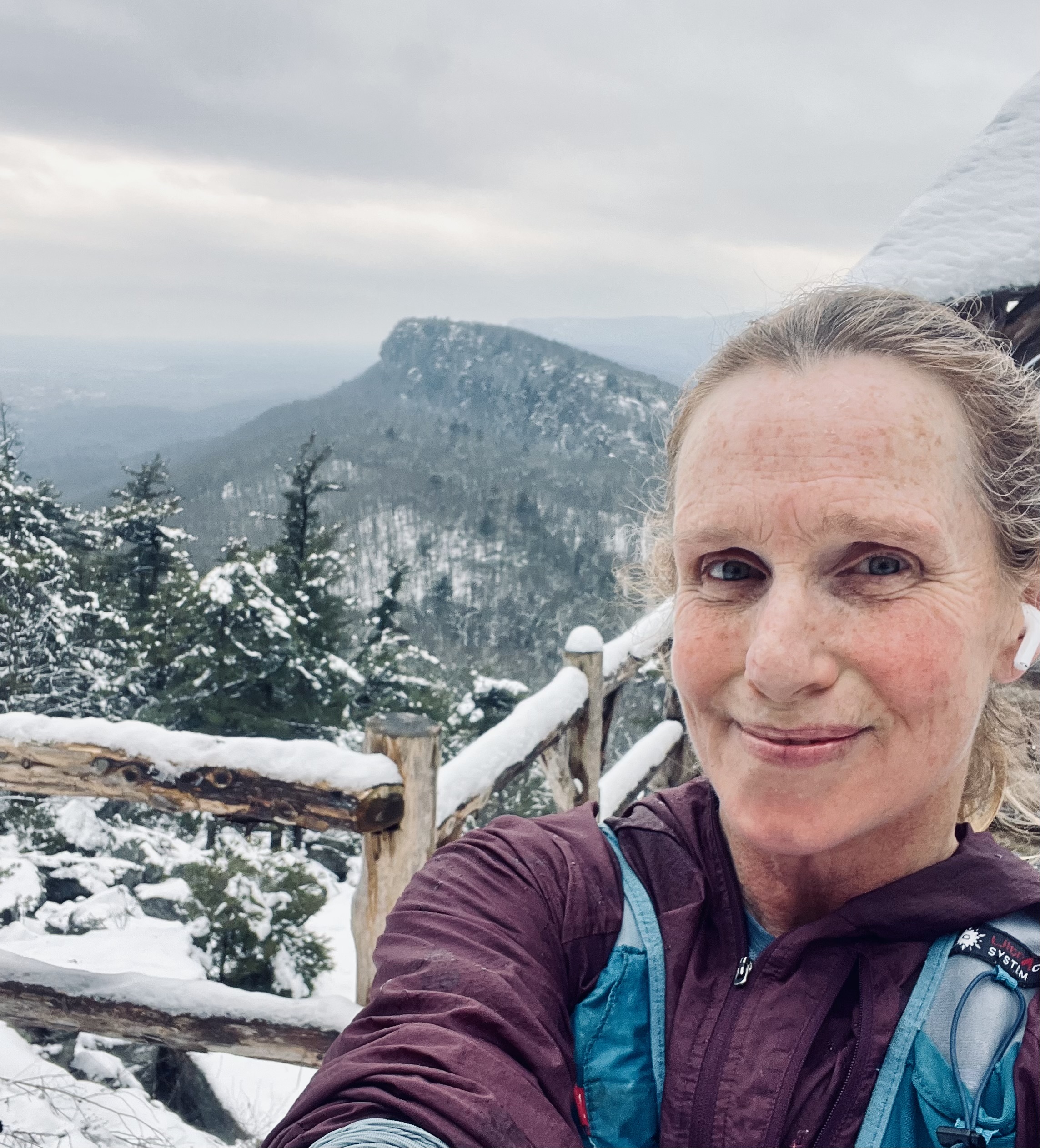
I did it. I launched a 2nd podcast. Here’s the goal. I want to help people who are trying to DIY it or feeling overwhelmed with how to start, just get some traction. I was that person. And despite being consistent and wanting to show up every day to get ready for an ultramarathon I was SCARED. I had no idea what existed after 26.2 miles and the last time I had run that far I was 18 years old. I was 50 when I started training in earnest for my first ultra. It was a long, slow build with lots of fits and starts. But the main thing that I did? I started. Again and again. Each day, every day.
I also listened to every podcast I could get my hands on. I ordered Jason Koop’s book, Training Essentials for Ultrarunning, and asked every ultrarunner I knew (which was only two people,) tons of questions. I love the physiology of endurance training. I’ve been an endurance athlete my entire life. I’m a swim coach. I love talking energy systems and why ultrarunners need sprint training. I can dig into threshold and sub-threshold interval training or muse on the importance of hill workouts. I can geek out on podcasts that go so far into the weeds on nutrition for ultramarathons and sleep strategies for 200+ mile distances but the aim of this podcast, or this particular podcast series, is to help get people started. To give them a road map. If they want to me to help fill that map in with them and make adjustments along the way? Great. If not, I want them to have some tools and some layperson’s knowledge of how to make their way to the starting line.
I hope you all enjoy this episode. Life update for me is that my ribs are healing. I’m on day 9 of my “healing block.” That’s what I’m calling my training now, a “healing block.” I can do some gentle walking without taxing the broken ribs too much. I can breathe a little deeper and talk a bit louder than I could those first few days. There are so many things that I didn’t realize I use the muscles around my broken ribs for, like writing! I love writing and that’s what I do as a profession but in a way that compliments all of the running outdoors. It’s a way for me to let my body rest and my mind go to work. Right now? It’s hard to sit in a writing position for any length of time before the pain gets intense.
Drawing is much easier as I’m left-handed and the broken ribs are on my right side. I can move around when I draw and stand some times and look at the light and shadows and then dive back in.
The recording is a bit rough. You can hear me fine and it’s clear, but there’s not fade-in or fade-out. No intro or outro music, there’s not even a way for me to stop recording and start recording without it sounding like I’m coming in from a different portal. It’s just me, with my son’s old microphone, sitting on my bed with a lap top and a free version of podcast recording software. One day, maybe I’ll get fancy, but I thought it was more important to just start then wait for fancy to arrive— Erin Quinn
Author’s Note: Please send me any ideas or questions or requests you have for this podcast. I’m going over mental training for ultrarunners next week but I’m open for suggestions on things that you’d like to learn about or hear me talk about.
 Erin Quinn
Leave a comment