I love a top 10-list. Unless it's about books and then I have a very difficult time. If I try to write a list about books, I want to get into genres and sub-genres and time-periods and authors and it becomes more of a spreadsheet only I don’t know how to create spreadsheets so more of a really messy map but with lots of scribbling in the margins as more titles come to mind. This could happen here, but hopefully I can narrow it down to podcasts I listen to about ultrarunning, typically when I'm out running. There are also a few that are not necessarily about ultrarunning, or running at all, but that I still enjoy listening to as I amble along the trails. And yes, sometimes they're so good, I have to just stop and walk.
***Authors Note: There are plenty of amazing podcasts out there on running, trail running, ultrarunning and these are only the ones that I have cued up because for whatever reason (which I hopefully explain,) I just happen to love them. My list came in fast and furious until #7 when I started to lose some steam. Honestly, it was just time to get outside and go for a run. With that, I hope you enjoy the list.
#1 Trail Runner Nation (TRN)
Hands down the best podcast for trail runners, aspiring ultrarunners or seasoned runners that are just looking for some “golden nuggets” (a favorite saying on the show,) about anything trail running-related. Co-hosts Don Freeman and Scott Warr, running buddies from California, have been podcasting since 2010 about their various tales-from-the-trail, making them the OG’s of the trail running podcast genre which has imploded since their humble beginnings when the audio sounded like they were in a windstorm on top of a fire tower. When I first began my foray into ultras, this was my go-to podcast. They’re typically 1-hour in length and have specific ultra-running guests and subjects for discussion whether it’s about nutrition, training, what should go in a drop-bag, how best to hydrate on a long-run, what to do when you hit a mental low, how to fix-your-feet, when to use trekking poles, or how to approach pacing a fellow runner. These guys have an arsenal of podcasts that can serve as your informal undergraduate degree to everything-ultra.
They’re funny, light-hearted and have this self-deprecating humor, even though they’re both veteran trail-runners. They have that middle-of-the-pack or even back-of-the-pack sensibility that make listeners entry into the podcast less intimidating and more inviting. They really want you to “join them for a run” along the trail and provide information that will, as they say before each episode, “help you become a better runner and just maybe, a better person.” The great thing about TRN is that with over 700 episodes, it’s this treasure trove of information. I’ve gone looking for various episodes on how to heat train, or whether cold-plunges are effective as a recovery tool or any number of discussions on the mental side of training. One of my favorite episodes of all time was with Krissy Moehl on how to run your first ultramarathon. I ended up buying the book and it really helped me get through my first 50k.
One of the many things that make Scott and Don so endearing is that they love to laugh at themselves, at each other, and often their guests. They also have a seemingly endless curiosity about all things trail running. One of their sidekicks for many of these episodes is Andy Jones-Wilkins. The trio delve into books of interest, Western States 100 previews, and comedic episodes like “Drop Bag” or “End of the Year Audio Magazine,” where they’re just riffing and making stuff up. You can literally plug them in and just have them banter back and forth as you run up hills or focus or cruise along the flats or the downs. It’s like going out for a run with a couple of friends, only you don’t have to do any of the talking. They’ll do it all for you. Below are three episodes that helped me get through my first ultra, become a better pacer and become a better runner.
Notable Episodes: 1) Episode 555 How to Run Your First Ultra with Krissy Moehl. 2. Episode 575 The Joy of Pacing 3.Episode 624 Run Longer, Run Stronger 7 Rules for Success
Andy Jones-Wilkins has a storied history of ultras from 10-finishes at Western States (including a 2nd place finish to Scott Jurek) several 1st place finishes at the historic Vermont 100 and podium finishes at Wasatch, Rocky Racoon, Javelina and Angela’s Crest 100 to name a few. He’s become the unofficial Voice of Ultrarunning beginning with his repeat visits on Trail Runner Nation, announcing the Golden Hour finishes at Western States 100 and more recently working for Aravaipa and Mountain Outpost as one of their live-broadcasters for the 5-day Cocodona 250-mile race, Hardrock 100 and Desert Circus among others. He’s written a column for iRunFar for the past decade, AJW’s Taproom, and is a guest on almost every podcast that has anything to do with trail running and ultrarunning. AJW has become synonymous with the sport of ultrarunning. After a lot of encouragement from Don Freeman and Scott Warr of TRN, AJW started his own podcast two years ago. He started out with a bang with his first guest being the ultrarunning female phenom, Courtney Dauwalter. His 2nd guest, Jim Walmsley, arguably the greatest male ultrarunner (at least in North America,) still racing today, and his 3d guest, was the man, the myth, the legend, Anton Krupicka.
Basically, Crack a Brew with AJW is like a walk along the red carpet for ultrarunning royalty. Because he knows literally everyone in the sport, there’s an intimacy to these interviews. AJW can always pinpoint a time where he’s crossed paths with his guests. He’s either run with them, raced them, paced them, or announced their name as they crossed the finish line. He’s been at almost every seminal moment in ultra-history and his podcast showcases the beauty and personality of the sport like none other. The first couple of seasons he hits upon all of the ultra-legends from Dauwalter to Krupicka to Jeff Browning, Pam Reed, Nikki Kimball, Devon Yanko and Karl Meltzer. The listener learns things about these individuals that they never knew before, mostly, in part, because they’re so comfortable sipping on their beverage and opening up with their pal, AJW.
Known for his almost obsessive-love of the Western States 100, (WSER,) AJW devotes and entire season to the race, interviewing race-directors, volunteers, top-10 finishers, members of the WSER board, and various OG’s of the WSER community. One of his more recent seasons focused on the 200+mile races where he’s truly a student, asking 200+mile athletes how they approach food and sleep and pacing and training for this new frontier of ultras.
There are many elements that put Crack a Brew with AJW in my Top 10 list. The episodes run 45 to 50 minutes long which is perfect for an easy run. The guests AJW chooses, coupled with his infectious laugh and passion for storytelling are components that make this show a joy to listen to.
Notable Episodes: 1) Season 2 Episode Sally McRae: Versatility, Parenting and Cocodona 250 2) Season 3 Episode 1 Pam Reed: Western States, Badwater and Hardrock in a Mere 20 Days. 3) Season 5 Episode 8 Jeff Browning- Rural Childhood, Longevity and the Transition to 200-mie Race
# 3 Rich Roll
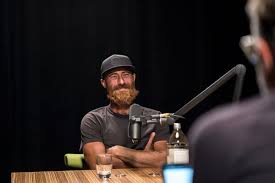
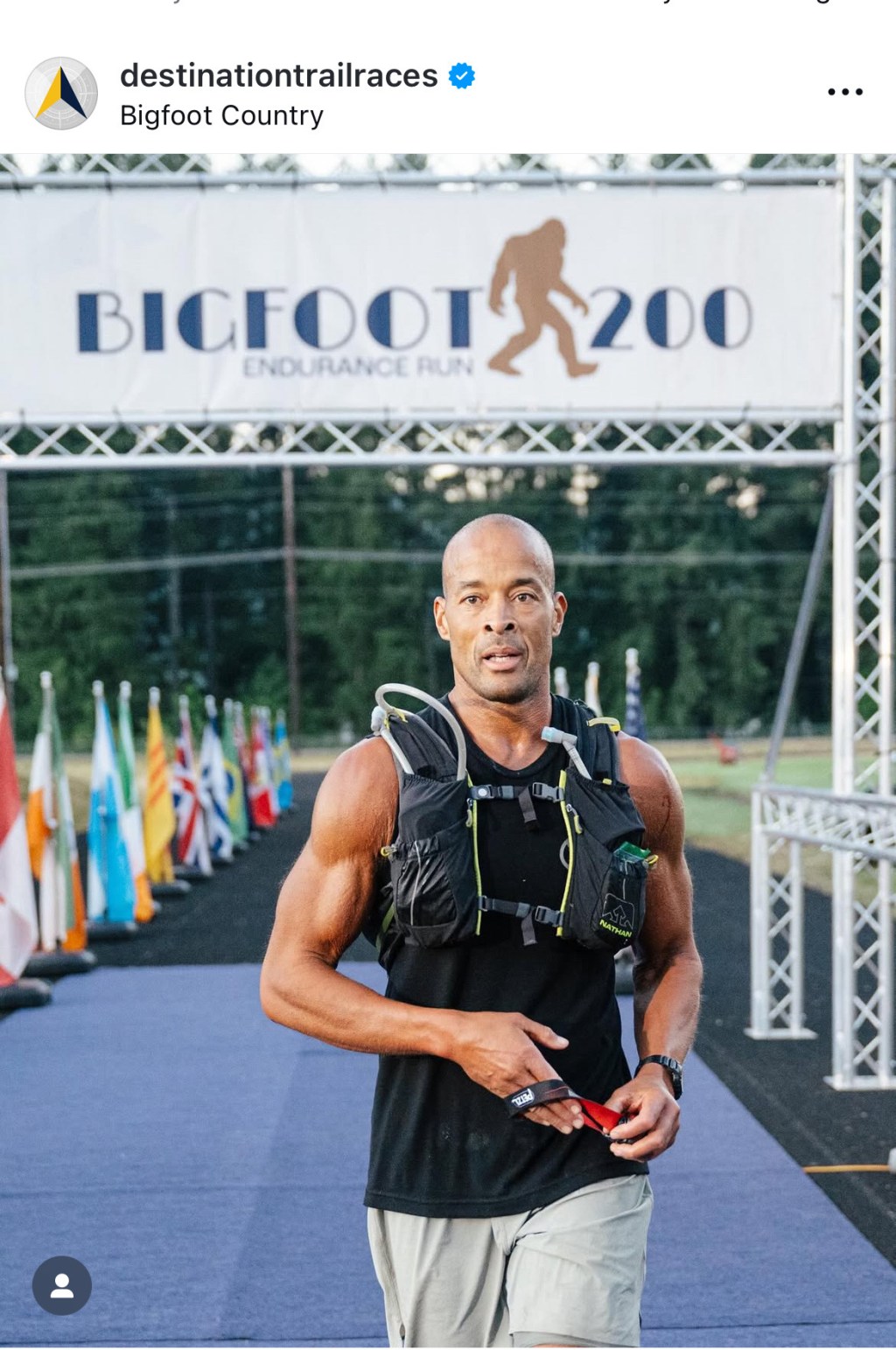
When I first discovered the Rich Roll podcast, I thought I’d died and gone to auditory heaven. Podcasts, at least in my world, were still a relatively new thing and then I found this interviewer who was an endurance athlete, a former collegial swimmer, a sober and proud member of Alcoholics Anonymous. He would have these conversations with guests where I felt like I’d gone through an emotional ultramarathon myself, learning about what landed them in jail or bankrupt, or living in a flop-house only to have this resurrection story that would bring me to tears. I’ll never forget the first time I heard him interview David Goggins, the Navy Seal turned-ultrarunner. This interview was prompted by a small article Roll had read about Goggins jumping into a 100-mile race with little-to-no training. It predated the GOGGINS-era, when he would become a household name, author, motivational speaker and social media influencer posting about running in the rain or pelting sleet, reminding his followers to “stay hard!”
It was compelling look into the more vulnerable Goggins, the fat kid, the fatherless child, the physical and academic failure. It unearthed that moment when Goggins made a pivotal decision to not give up on himself the way the world had given up on him. I remember running and crying listening to this story of Goggins refusing to quit trying to become a Navy Seal. Or him finishing ultramarathons on broken feet, forcing himself to learn how to swim despite being terrified of the water, finding ways to write his own story, one that he was proud of.
Then I became intrigued by the morsels that Rich Roll dolled out about himself, which, at the time were very few as he was always focused more on his guest. I had to venture out and find articles or podcasts where he was interviewed, like his 2019 visit on the Billy Yang Podcast, with Yang, an ultrarunner and filmmaker. I learned about Roll’s downward spiral into alcoholism–a journey that began, oddly enough on a Division 1 college swimming recruiting trip. I learned about his very brief and failed 1st marriage, leaving his corporate law job, finding love in a yoga class, becoming a husband a father, a triathlete, author, and eventually podcaster. It wasn’t an overnight success. He was in the world of podcasting that was still a bit of the wild west with few sponsors and possibly less listeners. Flat broke with a family to feed and a mortgage to pay, Roll plunged ahead, with an unwavering commitment to AA, to his family and his passion for all things health and wellness. Water seeks its own level and the guests that Roll brings on, each have something to teach him, and he, in turn, something to impart to them. Sometimes it’s just his uncanny ability to synthesizing whatever it is the guest was trying to say and returning it to them as something delicate and easy to absorb like the wafer in a Eucharist.
Like his hard-fought and continual journey of sobriety and wellness, Roll is not a quick listen. His podcasts are long. Often 2hrs or more. They take their own commitment and a willingness to go along for the ride. They’re almost always worth it and sometimes, to make them more palpable, I’ll break them up and listen to them over the course of a few runs.
There are some things you read, or in this case, some things you listen to that change you. When I stumbled upon Rich Roll’s interview with elite marathoner, Tommy Rivers Puzey—affectionately known as “Tommy Rivs” to the world, I felt like I had entered into the soft soul of humanity. I hadn’t known much about Rivs before this interview except that he had survived some sort of illness or injury and returned to the NYC Marathon (where he was once a frontrunner) with a smile on his face, despite the fact that it took him more than 9-hours to cross the finish line. He said it was the hardest athletic feat of his life.
What I learned listening to Roll’s talk with Rivs was that he was less than a mile away from qualifying for Olympic Trials in the Houston Marathon when he turned to wave other runners in with him and stepped in a pothole which resulted in twisting his knee and ending his shot at trials. This crushing disappointment sent him to the Grand Canyon, where he would go to refuel if he was low on spiritual nourishment. He came out of the Grand Canyon sicker than ever. It turned out that Rivs, an adored trail-runner, marathoner, PT and coach, was suffering from a rare form of deadly lung cancer. He takes the listener with him and is so brutally honest about the moments when he just wanted to drift away but his wife would show him a picture of their three daughters. He admitted that he was angry because it forced him to remember that he was a father and a husband and he had to fight and he had so little fight left in his 65-pound body.
What was so moving about this story wasn’t this grand moment of triumph, but Rivs continual quest to stay focused on gratitude. He’s happy to be able to walk. To see his girls. To kiss his wife. He’s happy to keep “shoveling shit,” another day. He sees pain as a teacher and each breath as an affirmation. Life is a later-thing. You don’t arrive there. “This is it,” he said to Roll in a raspy voice because his lungs have been so ravaged from the cancer and subsequent surgeries. Rivs, with his signature black, skull and crossbones baseball cap and knuckle tattoos that read let’s rage” is a chiseled figure with full scraggy beard. Although he looks like a pirate, he’s more of a poet and his Instagram is filled with messages of peace and love and hope. He’s like a Steve Prefontaine that was gifted a 2nd chance at life and he’s going to keep raging and running and loving as long as he can.
Roll has a special talent for eliciting the undercurrent that lies in all of us. The dark and messy parts as well as those crescendo moments. While he leans towards endurance athletes and those that are in recovery, or sometimes both, his repertoire of guests covers the gamut. They include leading voices in fitness, nutrition, art, music, spirituality and all things that are Roll-ish.
Notable Episodes 1) Episode #266 David Goggins: Navy Seal David Goggins is the Toughest Athlete On Earth 2) Episode #648 Tommy Rivs- The Poet of Endurance Rages On: Surviving Cancer, The Gift of Pain & the Healing Power of Gratitude 3) Episode #692 Malcom Gladwell: Running, Life, and Sundry Things Overlooked and Misunderstood
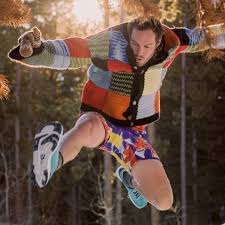
This is a relatively new podcast produced by Jeff Garmire who is an ultrarunner, ultrarunning coach, thru-hiker, author, filmmaker and holds various FKTs (Fastest Known Time) including one on the John Muir Trail. He loves the outdoors, crocs, that blurry line between thru-hiking and ultrarunning and interviewing people whose first name is also “Jeffrey.” In fact, he interviewed 6 different Jefferies in a row one month. Then he and his buddy, Derrick Lytle had an entire episode dedicated to the First Annual Jeffery Awards Show which included categories, nominations and awards that they hand-picked to “highlight the best and worst of ultrarunning in 2024.” I laughed so hard listening to this episode that I looked like I was having a seizure on the side of the trail.
One of the categories was “We Should Be Your Publicist,” with the nominees including Camille Heron, UTMB, Spring Energy and Crazy Mountain 100—all of whom had major public relation blunders 2024 . Another one of my favorite categories was the “Hayden Hawks Ultrarunner of the Year Award,” which of course, included Hayden Hawks and was awarded to Hayden Hawks. It was of no consequence who he was up against (like Dauwalter, Walmsley, Katie Schide or Jasmin Paris.)
There were several other noteworthy categories for the Jeffries including the “They Still Run?” award or the “The Most Tragic FKT Attempt,” and of course, “Walker of the Year.”
What I love about these episodes is the blend of Garmire’s goofy irreverence and at the same time his endearing attempt to use his podcast as practice for becoming more comfortable and adept at talking with other people, a skill he says he struggles with. I find myself rooting for him and enjoying these more unpolished episodes because someday he’ll probably become a big deal, if he’s not already.
You also never know what Garmire is going to talk about. He could be interviewing Tara Dower after her historic FKT on the Appalachian Trail, David Roche, who broke the course record at the Leadville 100 and then followed it up with a win at Javelina 100. He could be interviewing himself, or talking about a bear sighting, an allergic reaction to a bee sting, various hallucinations, elk encounters, epic FKT failures, costume malfunctions or growing out and dyeing his hair for his new driver’s license photo.
While Garmire is authentic and funny as hell, he’s also a student of the sport. He’s an accomplished thru-hiker and ultrarunner. He has educative episodes on the importance of heat training, strength training and how he’s making his own electrolyte mix and testing out gear in preparation for upcoming races. He gets into the importance of speed work for ultrarunners, the possible benefits of ketones, and the importance of failure. He’s a true champion of just getting out there and giving it your best shot. If you come up short of your goal? At least you tried. Failure is part and parcel of doing anything worthwhile in life and Garmire celebrates his failures as much as his victories and honestly, they make better stories.
He also gets into his training for the upcoming Cocodona 250-mile race in Arizona. Garmire is one of only 5 runners who has done Cocodona each year since it’s inception in 2021. He, Andrew Glaze, Wes Plate, Aaron Fleisher and Jose Cosa all received a 1000-mile belt buckle from Aravaipa Running (the race company,) for their efforts and are all signed up for another round. The fab 5 will be hitting that rocky trail at Black Canyon Ranch in less than a month in a quest for their 5th finish.
What I like best about Free Outside is Garmire’s wild-card factor. There’s nothing scripted about his podcasts. And he’s not talking from behind a curtain, he’s always outside, doing something whether it’s running, hiking, racing, FKT-attempting, crewing, pacing, filming, race directing, or finding more Jeffries to get on the show. He could also be making videos of himself in a housedress, wig and crocs pushing a baby-jogger (without an actual baby inside it) at a local 5K. Tune in. He uploads religiously 2x a week and it’s never boring.
Notable Episodes: 1) Tara Dower and the Art of the Appalachian Trail FKT 2) Failing Epically at the Tahoe Rim Trail FKT 3) The Jeffrey Awards: Highlight the Best and Worst of Ultrarunning in 2024
This is a podcast dedicated solely to 200+mile races or multi-day endurance events. If that’s not a niche platform, not sure what is. While it may sound like a sub-culture within a sub-culture, and it is, the 200+mile races are currently imploding with media coverage, podcasts, participants and new courses that seem to get longer and harder each time they’re announced. The co-hosts of the podcast are Kevin Goldberg and Peter Noyes—both of whom have run numerous 200+mile races with Noyes just coming off of the Inaugural Arizona Monster 309-mile race.
They dive deep into these multi-day races from the perspective of the athletes who run them, race directors who put them on, volunteers who treat the runner’s gnarly, blistered and battered feet and the athletes themselves–both the elite and amateur 200-mile participants. Their enthusiasm for these extreme events is contagious and despite Goldberg having already completed 10 of them himself, he’s always thirsty for more knowledge and insight into the physiology of ultrarunning, how best to approach sleep, nutrition, aid-station efficiency and what happens when things go wrong, which they always do, at some point in a 200+mile attempt.
The podcast is also a critical tool for those thinking about or who have already signed-up for one of the 200+mile races in North America and abroad as Distance to Empty does a lot of course previews and reviews so that listeners can become more familiar with each section of the race. It’s one thing to look at an elevation chart and it’s another thing to have feet on the ground to give a more visceral understanding of what a particular 24-mile stretch is like. I was both fortunate and unfortunate to have discovered this podcast after completing the Moab 240 and Cocodona 250 for the first time. Goldberg and Noyes and their guests would have provided me with plenty of useful insight. But, as Goldberg can attest to, when it comes to 200+mile races, there is always more to learn.
They’re currently unleashing a bunch of short, 15-20-minute interviews with some of the top-contenders for possible podium finishes at the Cocodona 250 beginning on May 5th and running through May 10th. They’ve had last year’s winner, Harry Subertas and the GOAT herself, Courtney Dauwalter on along with last year’s female winner, Rachel Entrikin and Max Jollifie, this year’s Moab 240 champ. The series is called “Flagstaff Bound,” as the race ends in Heritage Square in Flagstaff, Arizona—a mecca for trail runners. If you’re obsessed with 200+mile races like these two hosts and their guests, or you’re just 200 mile-curious, then this is the podcast for you. They ask everyone they interview what their “distance to empty” is. Not surprisingly, no guest has ever claimed to have reached it.
Notable Episodes: 1) Trail Running and Wildlife Encounters w/ Jeff Larson of the Tooth and Claw Podcast 2) Jeff Browning: Moab 240 and Cocodona 250 3) Natasha Swartley AKA “Thor” the Race Trail Medic
#6 Tooth & Claw- True Stories of Animal Attacks
This podcast goes into great detail about some of the most extreme wild animal attacks ever documented. While that sounds gruesome and it is, the podcast hosts, Wes Larson (a wildlife biologist that specializes in bear behavior,) his brother Jeff Larson and their buddy Mike Smith make the episodes so entertaining and informative that the listener can find the stories both riveting and horrifying at the same time.
Oddly enough this podcast popped into my favorites because of Kevin Goldberg’s (Distance to Empty co-host) love of the show. Before I knew it I found myself listening to one of the most masterful and deeply researched episodes on the circumstances that led to the horrific and violent demise of Timothy Treadwell (aka The Grizzly Man,) and his partner, Amie Huguenard in October of 2003 in Alaska. Treadwell had long considered himself to be something of a bear-whisperer and spent more than 13 summers Katmai National Park which has a robust grizzly bear population. He fancied himself the guardian of the bears and as such attempted to live among them.
This 2-part series goes into the details that led to the couple’s demise, the evidence from the attack, the theories concerning Treadwell’s perceived connection to the grizzlies and his very rocky relationship with the National Park Service and the scientific community at large. It’s an absolutely wild story and the podcast does it justice, brining in books written on the subject, interviews with park staff, bear biologists, the Grizzly Man movie made by Wernor Herzog. It’s a wild and crazy story and one that will stay with you. Then there is their “Night of the Grizzlies” episode (also a two-part story) that takes an in depth look into the event surrounding a night in Glacier National Park in Montana in August of 1967, when two females were separately attacked and killed by a grizzly bears while camping approximately 10-miles from each other.
While listening to stories on some the most brutal wild animal attacks on humans does not necessarily sound like great material for trail-runners, they certainly take one’s mind off the discomfort of running and remind you that there’s far worse things that could happen on the trail besides a blister or a leg cramp. Listeners learn from Wes what not to do if you encounter a bear as well as what to do if you encounter a bear and these instructions are different for the various species of bears.
While I’m fascinated with the bear stories, the podcast also has a cache of episodes on various shark, snake, spider and mountain lion attacks, among others. But they almost never blame the animal. Wild animals are just doing what wild animals do and these attacks are more often than not prompted by one of three things: 1) human encroachment 2) human ignorance or 3) human arrogance or a reckless combination of all three.
Most of the attacks were preventable and the hosts go into detail on how not to have these things happen and more importantly, despite how sensational these reports are, they are also incredibly rare. As a bear biologist and wildlife conservationist, Wes and his co-hosts are almost always in the bear’s corner. They help listeners understand the different types of bears (black bears, brown bears and polar bears,) where these bears can be found and ultimately, how to appreciate these majestic animals without putting yourself at risk. While Wes is often serious and provides much of the scientific research required to unpack these attack stories, Jeff provides a lot of comic relief and Mike just seems to be along for the ride. The three of them have a chemistry that will make you laugh-out-loud while only seconds later being able to feel the moist and (reportedly very bad smelling) breath of a grizzly as it shakes someone out of their sleeping bag. (Note to self: do not play dead.)
The gore is present but so are the laughs and above all, Tooth & Claw wants wildlife to stay wild and protected. For trail-runners, there are actually some helpful tips and wild stories to listen to as you’re trying to take your mind off the miles in front of you and the bear that may just be lurking around the next corner.
Notable Episodes 1) The Grizzly Deaths of Timothy Treadwell and Amie Huguenard, Part 1: Timothy Treadwell’s Rise to Prominence 2) The Grizzly Deaths of Timothy Treadwell and Amie Huguenard, Part 2: Tragedy in the Grizzly Maze 3) Julianne of the Jungle
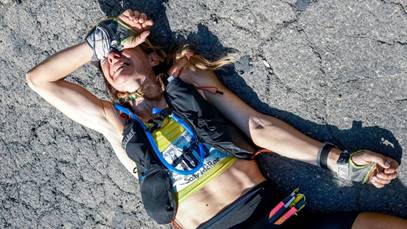
(Photo Credits Choose Strong Podcast)
This podcast is hosted by ultrarunner, coach, business owner and motivational speaker, Sally McRae and her husband Eddie McRae is just a feel-good listen whether you’re out running, hitting the gym, doing dishes, or looking for that spark to get you out the door. The podcast is about running but more often than not, it’s just about how we can put our best foot forward to get through those hard seasons in life. McRae, recently coming off the Grand Slam of 200’s has had her share of low-points in both her races and her life. Her humanness and infectious laugh and ability to connect with people at every stage of their athletic journey is what makes her one of the most popular personalities in the sport of trail-running. Eddie, her sidekick and life-partner and father of their two children helps to balance out the podcast because he is not an elite runner but more of a couch-to-5K guy, an on-again-off-again gym-goer, a basketball and bowling fan with a calm, steady, almost camera-shy demeanor that makes them both relatable. The entire theme of the podcast, really fueled by Sally’s life experience and being one of the first sponsored female ultrarunners, is that we always have a choice when faced with struggle. We can choose to be strong and take that next step. She’s like a life coach and a running coach that sits on your shoulder and tells you that you can keep going, that you are stronger than you think, that this discomfort will pass, that you can start again and again and write a new chapter in your life. One of her most infectious mantras is “what kind of story do you want to write?” You’re the author of your life and your run and your race and how do you want to narrate it? There’s a lot of practical advice in terms of how to fuel runs and add strength and mobility training to your program but there’s also a lot of attention paid to those that are just getting out on the trails for the first time, or trying to squeeze in a run or a lift after work or while taking care of kids. She’s a big believe in consistency and just getting something done. It might not be what was on the calendar, it might not be what you had planned but doing something, Sally will encourage you, is better than doing nothing.
She and Eddie let the listeners into their lives and you get to know their two kids and the moves and trips that they take and the races that Sally is training for and what she’s doing to prepare for them. You can learn about Eddie’s training plan for a marathon that Sally’s coaching him for. Eddie likes to dive into their Choose Strong community and select some letters or posts about people that were inspired to run their first trail race, attempt a 50K or someone battling cancer and getting outside and going for a walk for the firs time since they finished chemotherapy.
The episodes I personally enjoy the most are when Sally is recapping a race, whether it’s her experience at the Moab 240 (which she won in 2023) or her triumphant finish at the Cocodona 250 (when she’d been running with blisters that had turned to open wounds for more than 200 smiles) or when she’s interviewing other athletes and ultrarunners like Heather Jackson, Max Joellifie and her longtime bestie, Billy Yang. If you tune into Choose Strong, it’s almost impossible not to be inspired to lace up your shoes, start running, keep running and to silence that inner-critic. Sally is all about finding ways to keep you encouraged, to keep you consistent and to remind you that you’re stronger than you ever imagined.
Notable Episodes 1) Winning the Moab 240—Greater than the Pain 2) Legendary Adventurer & Filmmaker Billy Yang Shares his Powerful Story 3) Max Jollifie | Just Keep Going
This podcast is hosted by two longtime friends and outdoor enthusiasts from New England, Danielle LaRock and Cassie Yahnian. Their love of National Parks, camping and hiking adventures as well as true crime all come together in these episodes. It’s like they’re sitting around a campfire telling stories about various park lore that they’ve heard, or the mysterious disappearance of a woman who went into the mountains and was never seen again. Like Tooth & Claw podcast, the hosts of this podcast do their research on their subject, which in this case often focuses on true crimes, disappearances or strange encounters in parks both in the US and abroad. They’re able to synthesize all of the material that they can uncover and then present the story in a cohesive, often chilling and compelling manner. The two women also are advocates for National Parks and public lands and have several episodes that go into some of the little-known history of these parks, including rangers, female pioneers, abolitionists, Indigenous heroines and wild discoveries. They’re the female counterpart to Tooth & Claw, so much so that they’ve each hosted episodes where they invite the other podcasters onto their show. Recently Danielle and Cassie have taken up the charge to protect our public lands, national parks and specifically our park staff of which 4,400 were terminated on Valentine’s Day without reason or warning by the current administration. They raise a call to arms to defend our public parks and park staff and put proceeds towards the National Park Foundation as well as the National Forest Foundation.
Whether you’re looking for a story about a murder in Yellowstone or along the Appalachian Trail or in Acadia National Park, this is a fun and at times, chilling, podcast to tune into.
Notable Episodes: 1) A Love Worth Fighting For—Speaking up for our Public Lands 2 A Serial Killer in Yosemite 3) Finding Aubrey—Langtang National Park
Honorable Mentions 9-12 (I had to add two more for good measure!)
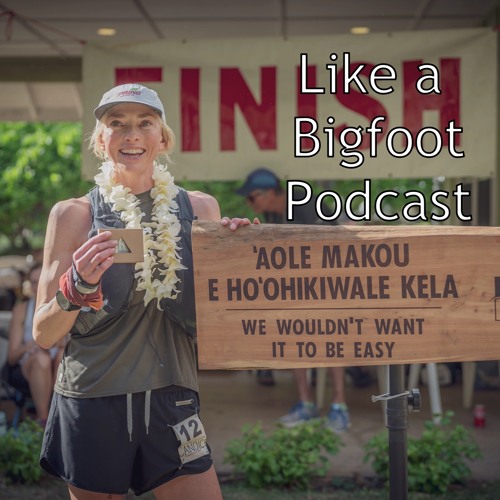
A Podcast by Chris Ward where he interviews a variety of guests on subjects that including endurance running, outdoor adventures, perseverance and discovering what is possible.
Favorite Episode: Candice Burt: 200 Ultras in 200 Days The Story of this Epic Challenge
#10 Everyday Ultra
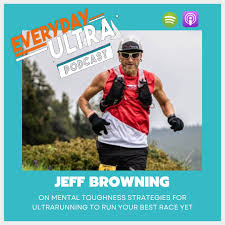
Podcast by Joe Corcione, ultrarunner, running enthusiast, coach and pacer extraordinaire. This podcast provides great insights into ultrarunning, mindset, race-specific training, gear, nutrition, mindset but most of all his interviews. He has some great guests and my all-time favorites was with Sally McRae after she won the Triple Crown of 200’s and his interview with Jeff “Bronco Billy” Browning.
Favorite Episode: Sally McRae Winning the Moab 240 and Lessons from the Grand Slam of 200’s
#11 The Pain Cave
My introduction to ultrarunning came from these two podcast-hosts, Jason Friedman and Phil Vondra. Fellow Beast Coasters, who train on the same trails as I do in the Shawangunk Mountains. Jay and Phil get deep into the weeds of ultrarunning in these episodes, especially when it comes to their annual Ultrarunner of the Year (UROY) selections (and subsequent debates.) They also have insightful and entertaining race recaps as well as interviews where they spin guests like Riley Brady, Peter Mortimer and their coach, David Roche of SWAP through their 20 questions including, “what’s your go-to karaoke song?” or “Which celebrity do you wish would follow you on Instagram?” which always elicits some interesting responses.
These two train together, race together, pace each other and joust with one another on the podcast, usually having something to do with Camille Heron or whether or not 200+mile runners deserve to be in the mix for the UROY category. They’re also accomplished ultrarunners themselves with enough 100-mile belt buckles to hold up an entire line-dance worth of blue jeans.
#12 BACKLISTED: Giving New Life to Old Books.
A literary podcast presented by John Mitchinson and Andy Miller. If you’re a bibliophile like I am this podcast opens up new worlds of books that I hadn’t even known existed, they help me rediscover books I had once treasured and they bring to light books that keep reinviting themselves as the years go on. Ones stay with you long after you’ve finished reading them. Those books whose stories and characters inhabit your world and dreams and memory like invisible friends. They are the shadows that move alongside you and call to you and make you laugh or shudder when you are alone. This podcast has nothing to do with running but everything to do with passion, in this case, passion for words and books and stories that dazzle and decimate and decidedly make you want to crawl under an old quilt and read for days on end.
— Erin Quinn
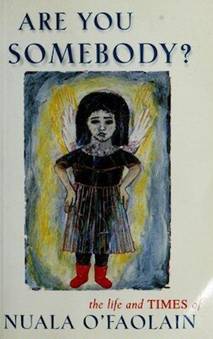
Favorite Episode 1) Toni Morrison—Beloved 2) Nuala O’Faolain- Are You Somebody
 Erin Quinn
Leave a comment